My20: Enhancing Traveler Information During I-20 Construction
Dates: January 2024 - Present
Project Role: User Research Lead
Focus Areas: Usability Testing, User Needs Assessment, Traveler Information
Project Overview
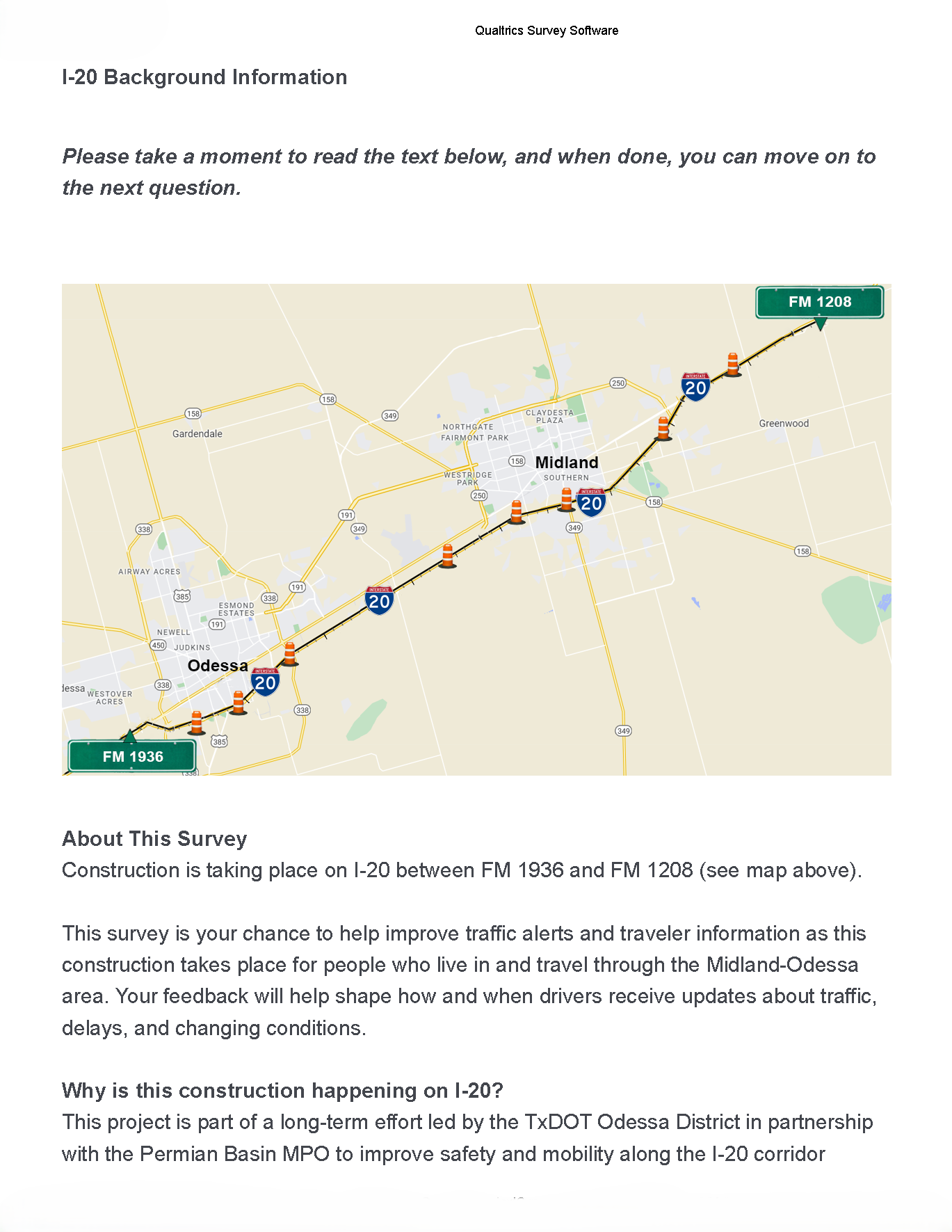
The Permian Basin Metropolitan Planning Organization and the Texas Department of Transportation (TxDOT) Odessa District are undertaking a major construction project along the I-20 corridor in the Midland–Odessa area to improve capacity and safety. Construction is expected to last through 2040. The corridor experiences heavy truck traffic due to regional oil activity and offers limited detour routes, making I-20 a critical travel route for residents. This project focuses on improving traveler information during construction by understanding user needs and evaluating existing tools.
My Contributions and Responsibilities
Develop and employ qualitative methods to assess traveler information needs and awareness of construction impacts.
Conduct usability testing to identify opportunities for improved information dissemination and communication.
Project Artifacts
Usability Testing Summary
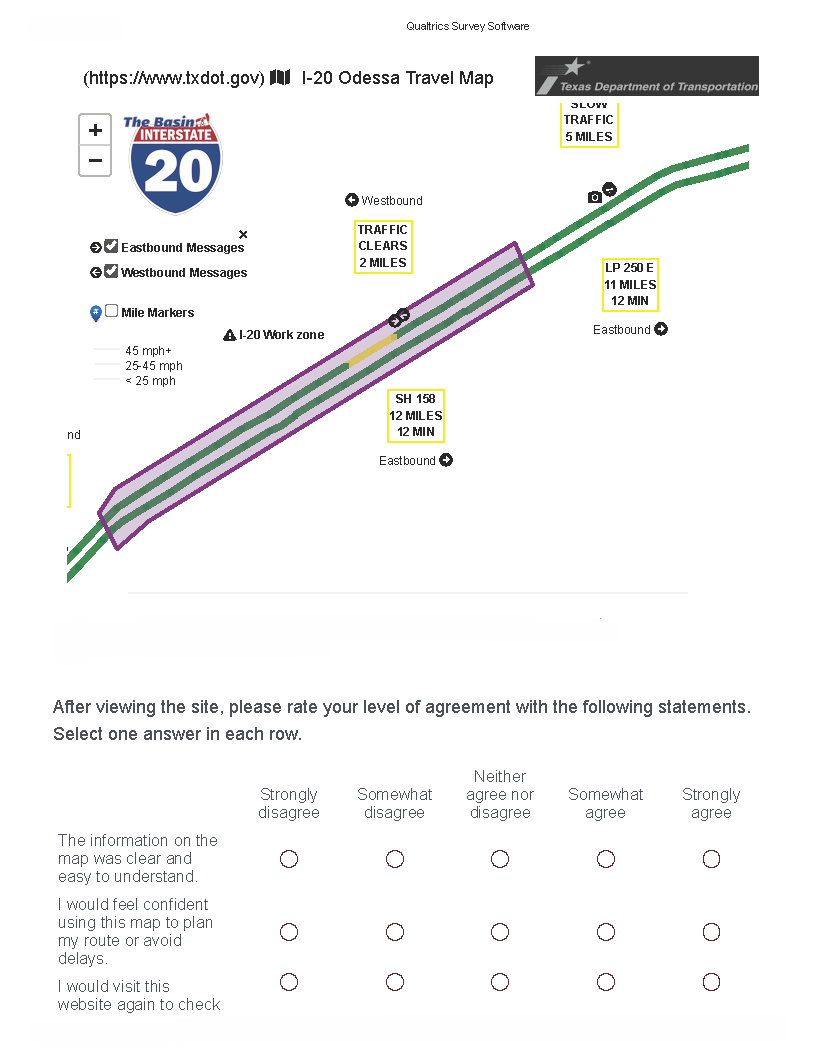
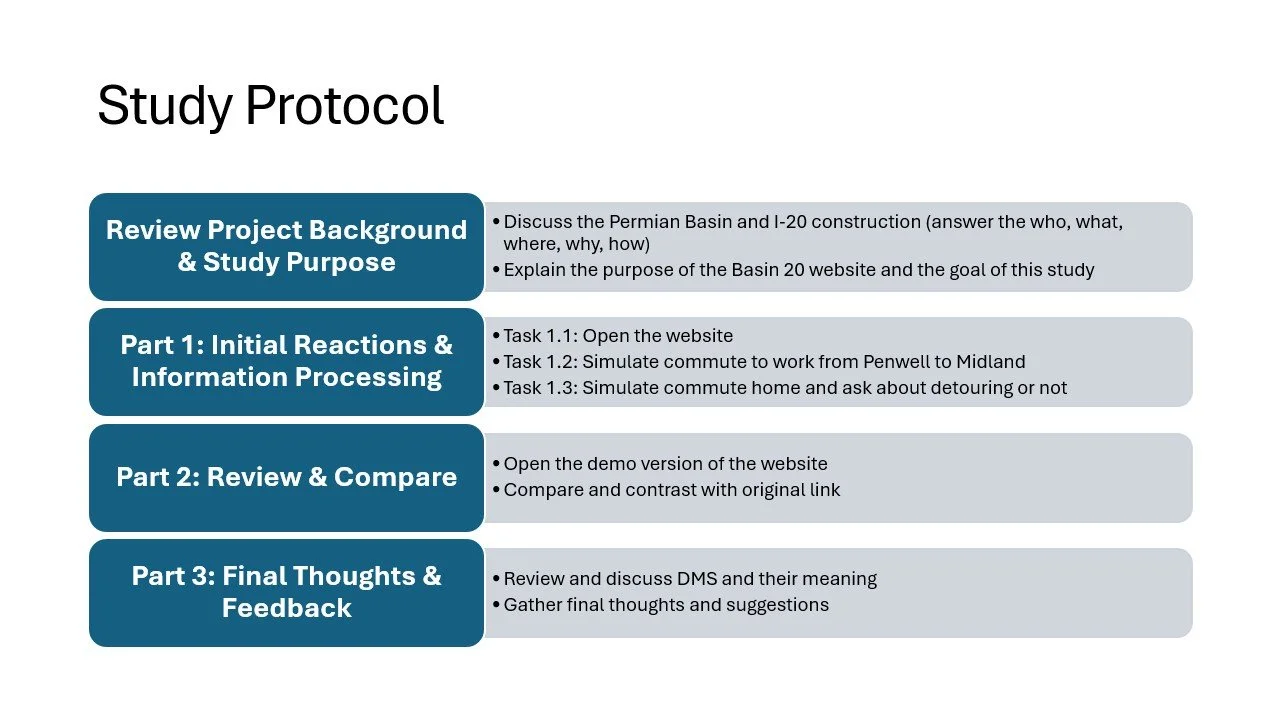
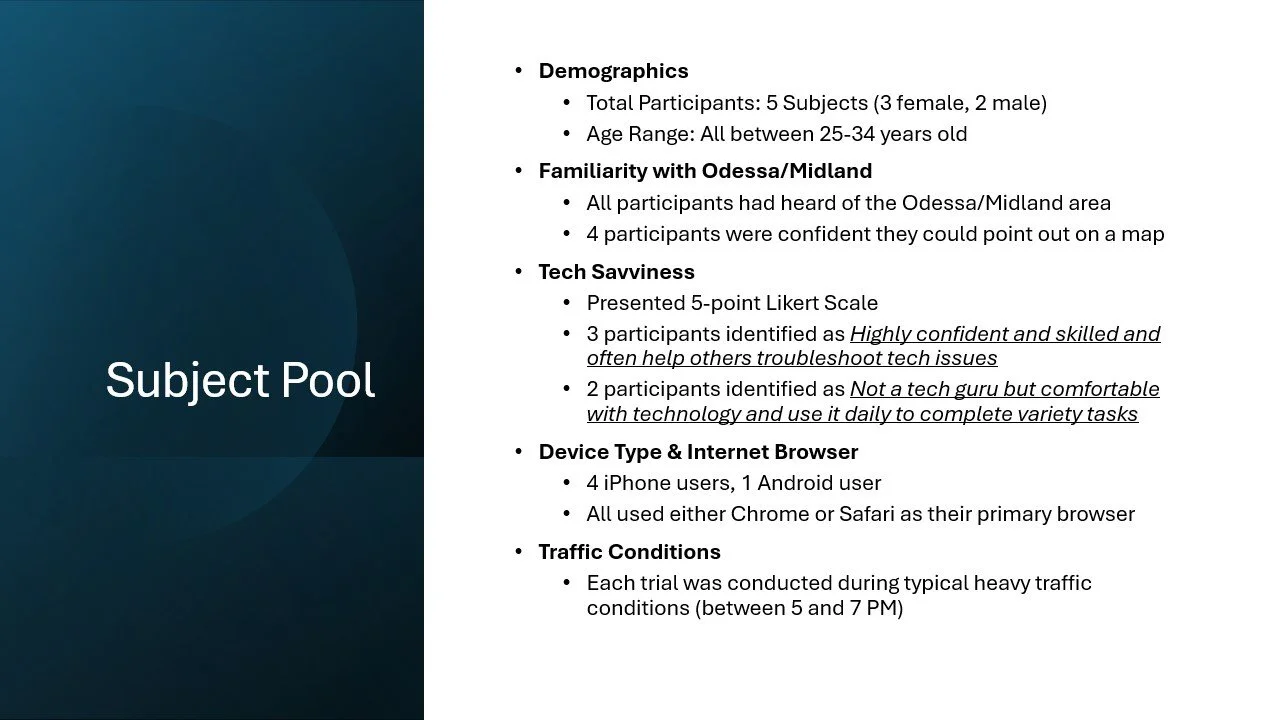
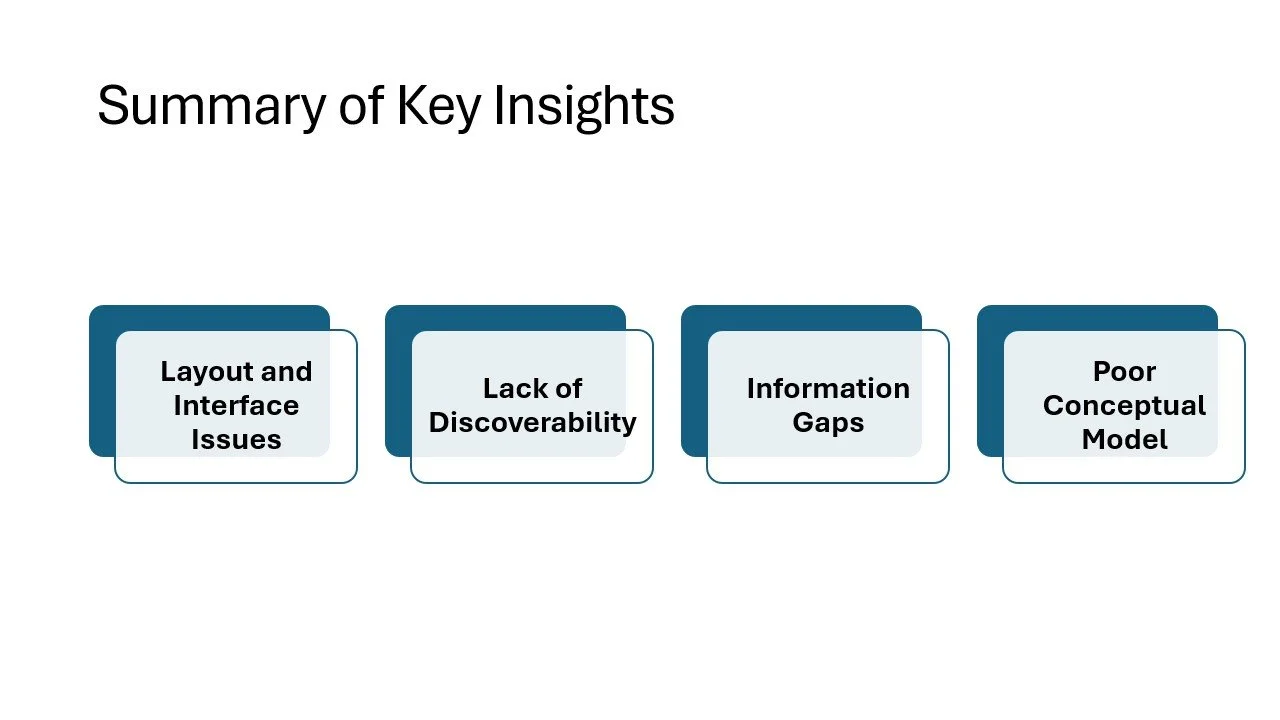
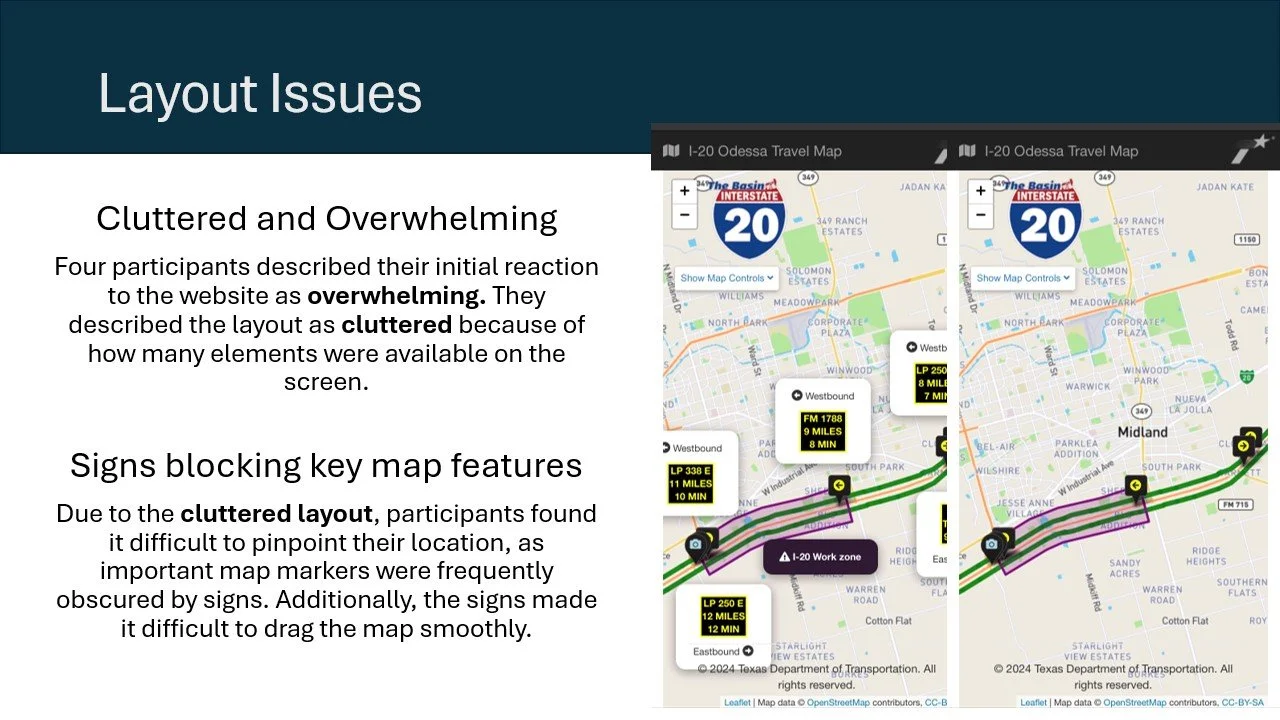
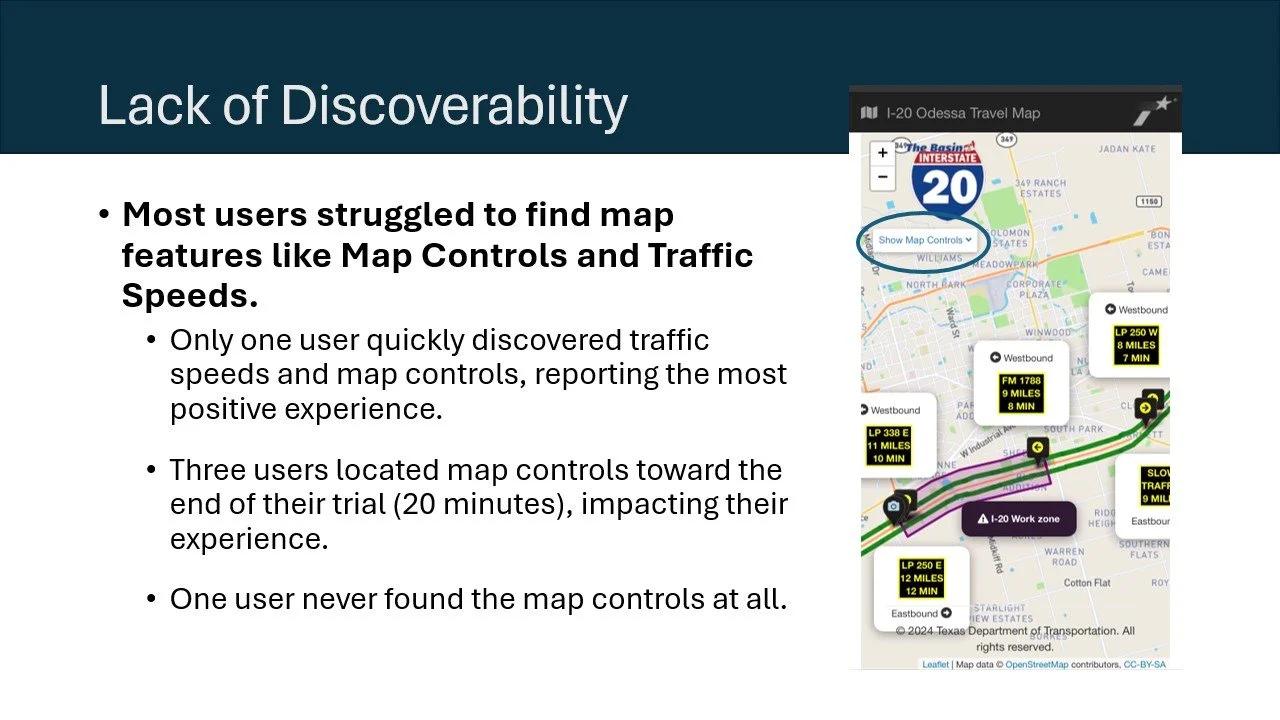
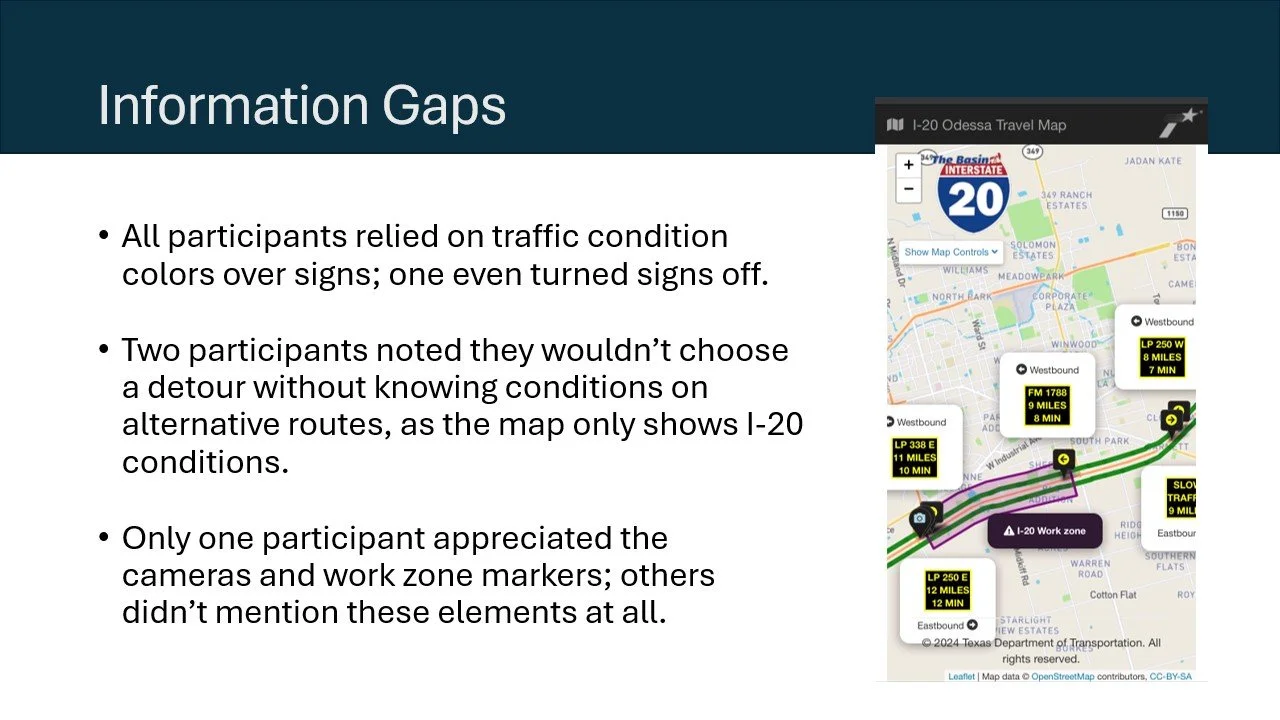
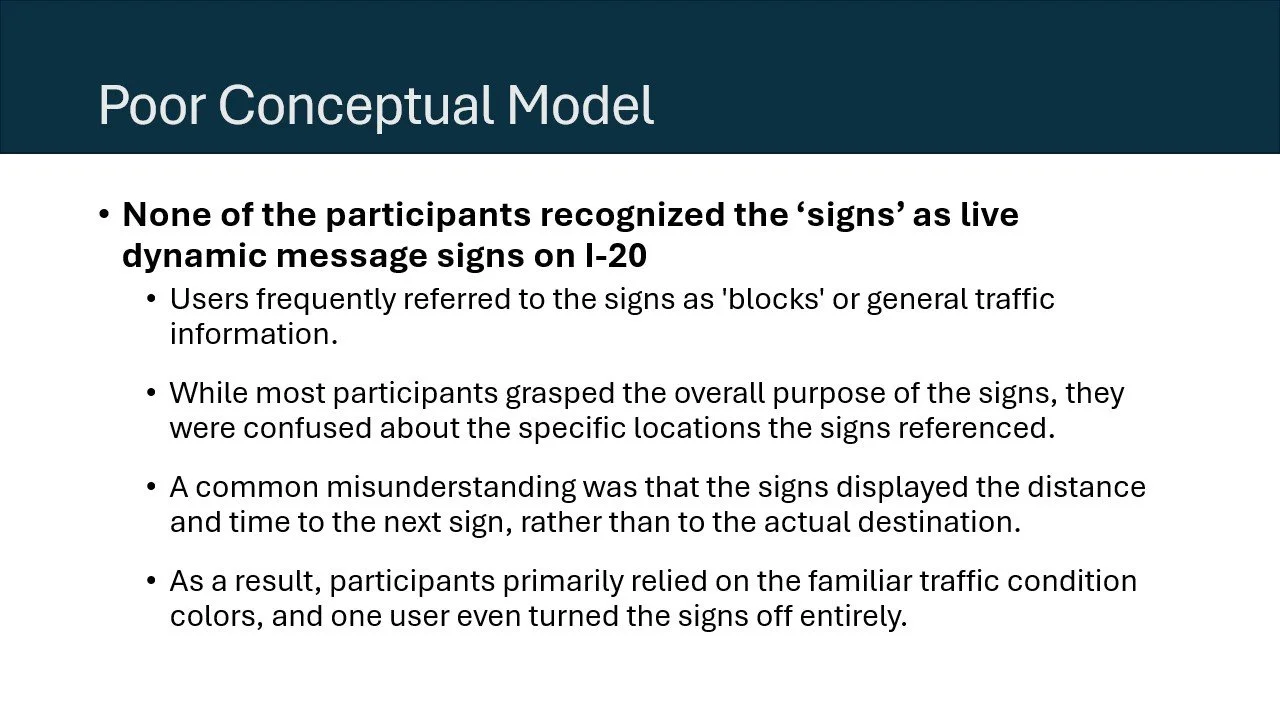
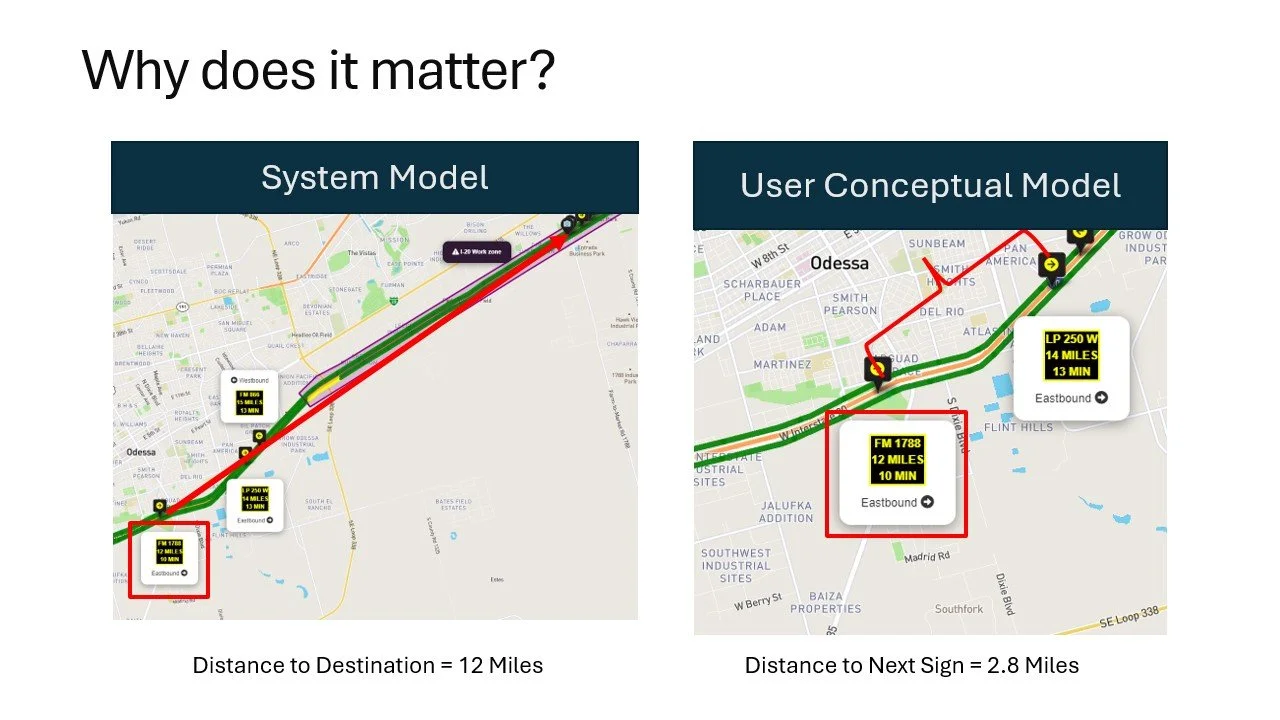
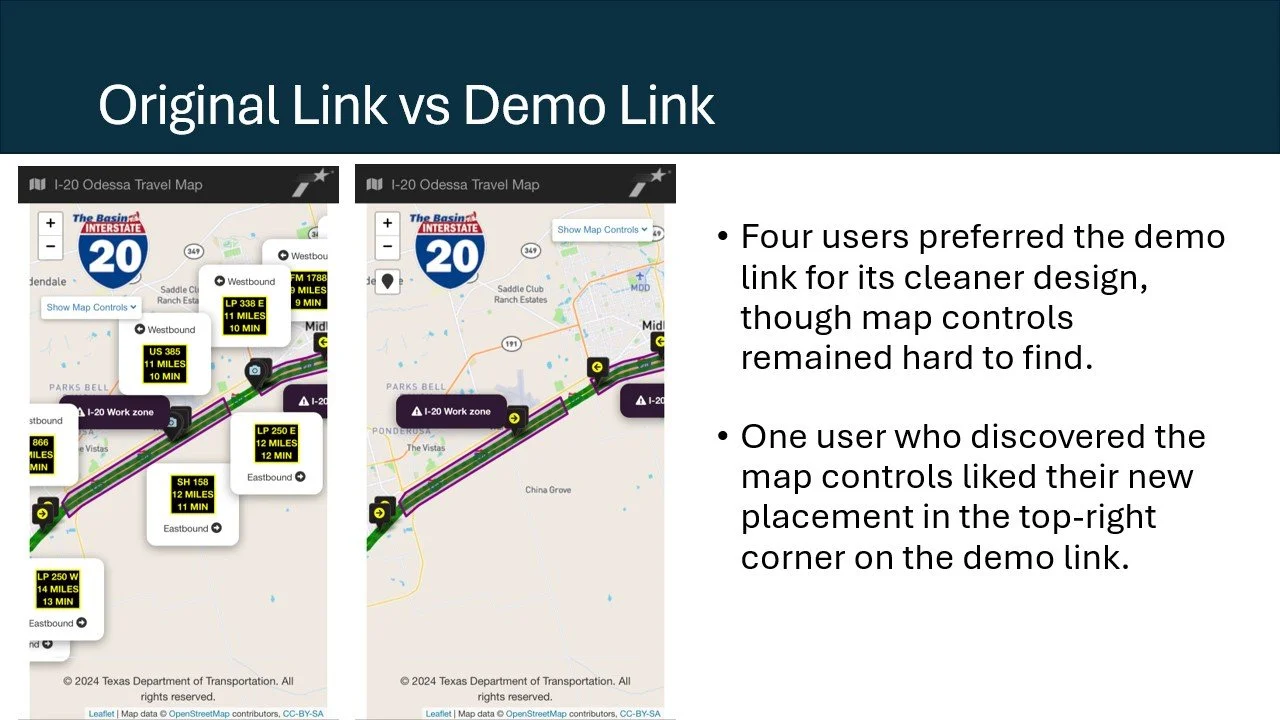
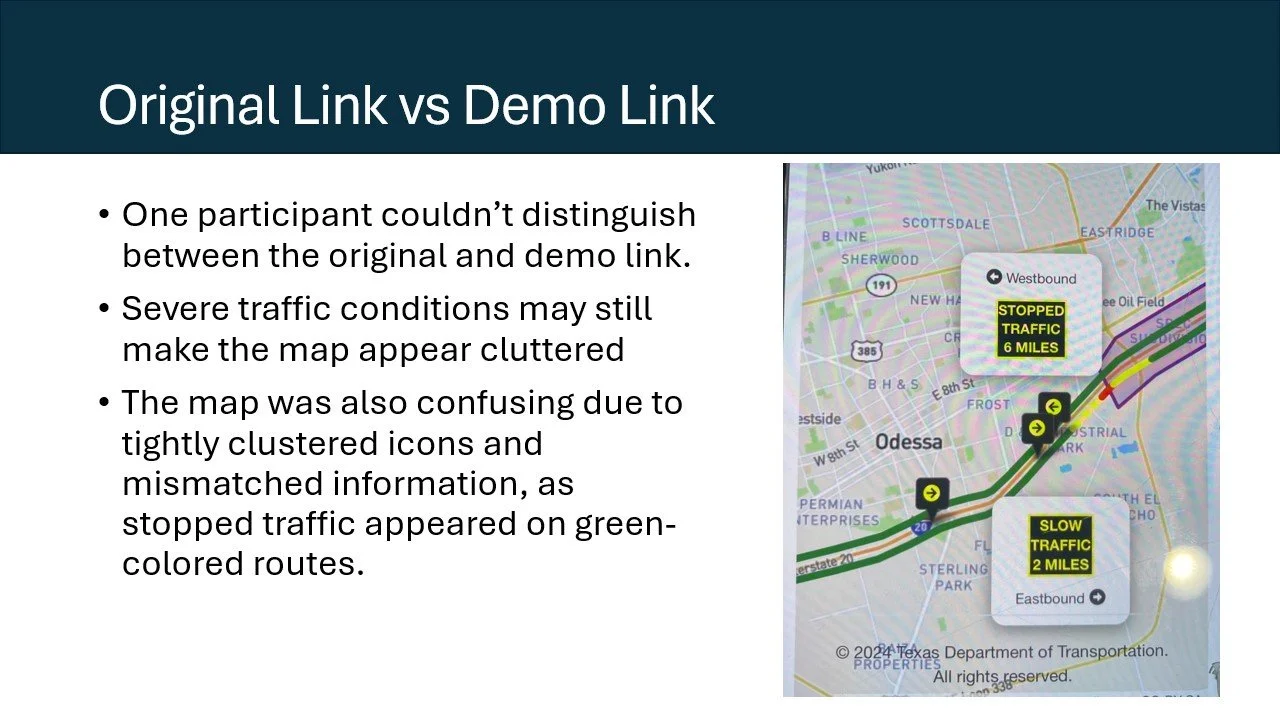
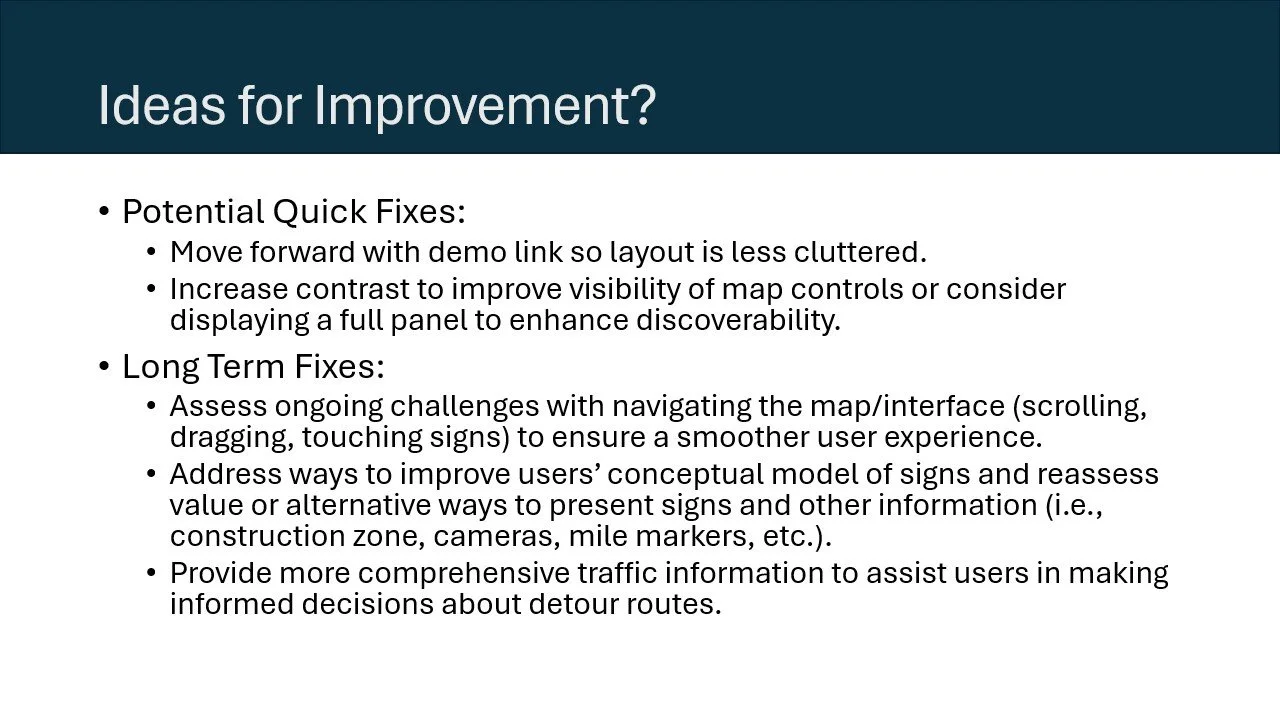
This presentation summarizes findings from usability testing I conducted of our project’s traveler information website (https://www.basin20.org/I20odessa-web/), including the study procedure and key insights. Results revealed a mismatch between the website’s intended design and the users’ mental model.
It was not clear to users that the available information mirrors live dynamic message signs (DMSs) along I-20. Instead, participants interpreted the signs as general travel times and distances between signs, rather than travel times to the next location displayed on a live sign. It is possible that conducting usability testing with locals could yield different results, but this outcome is significant and points to how the way information is displayed can influence traveler decision-making.
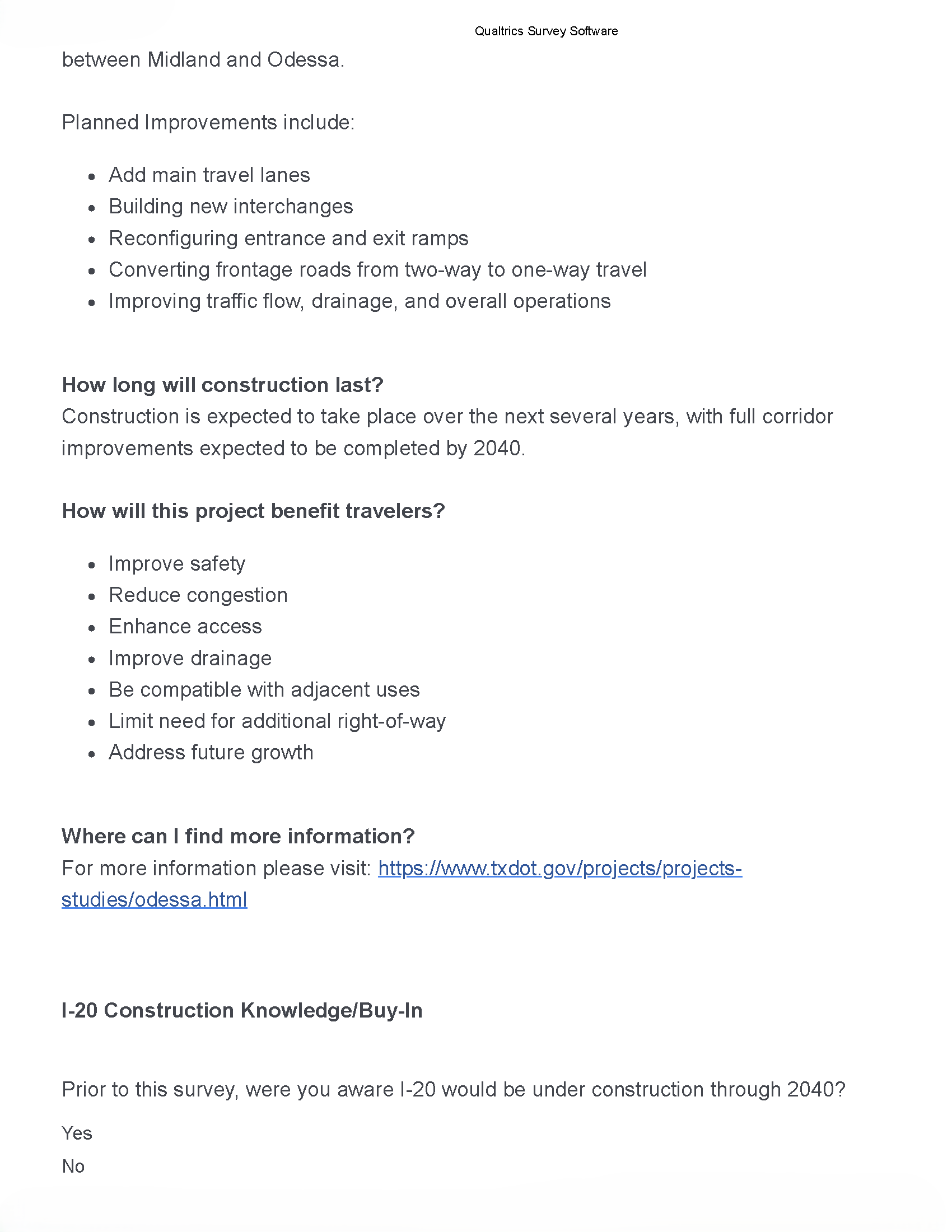
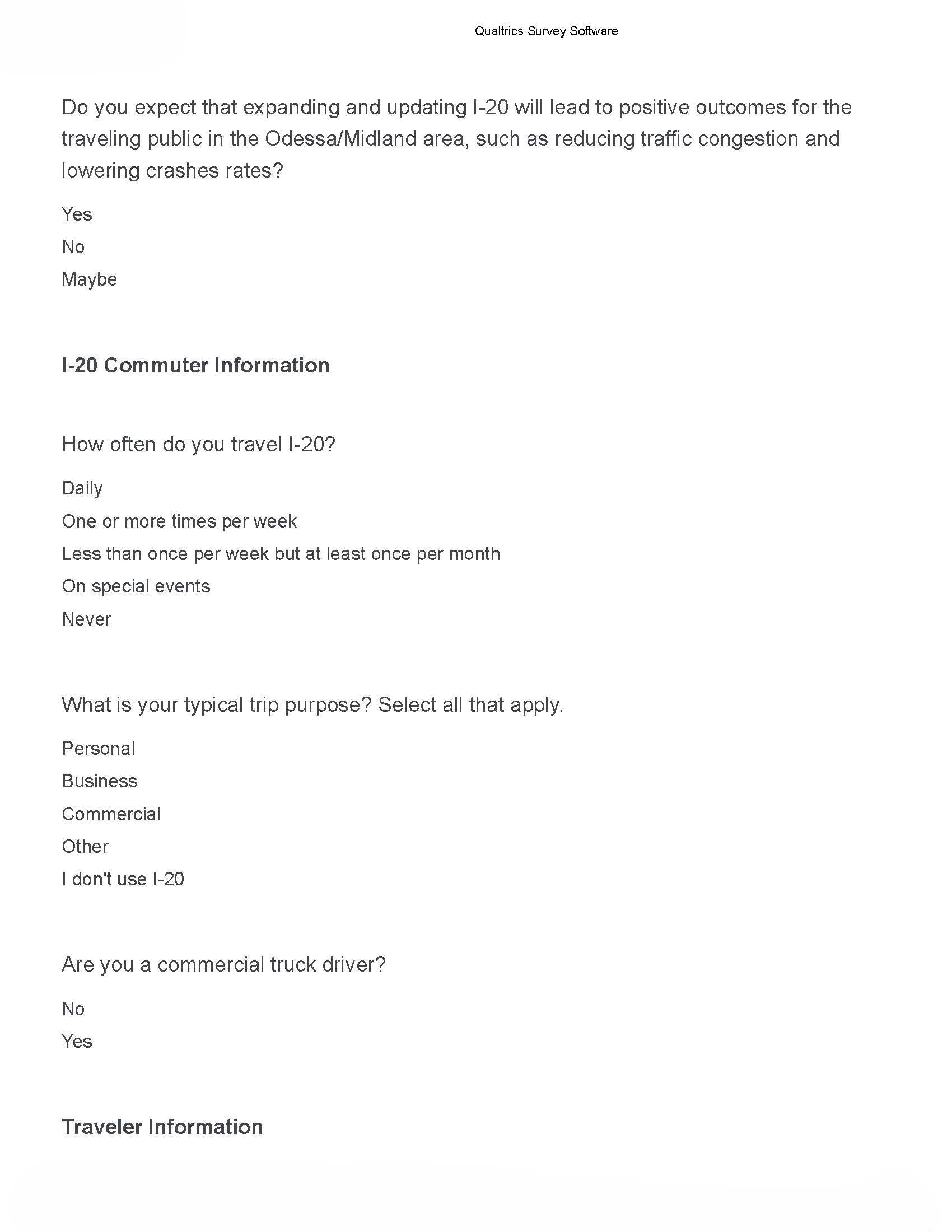
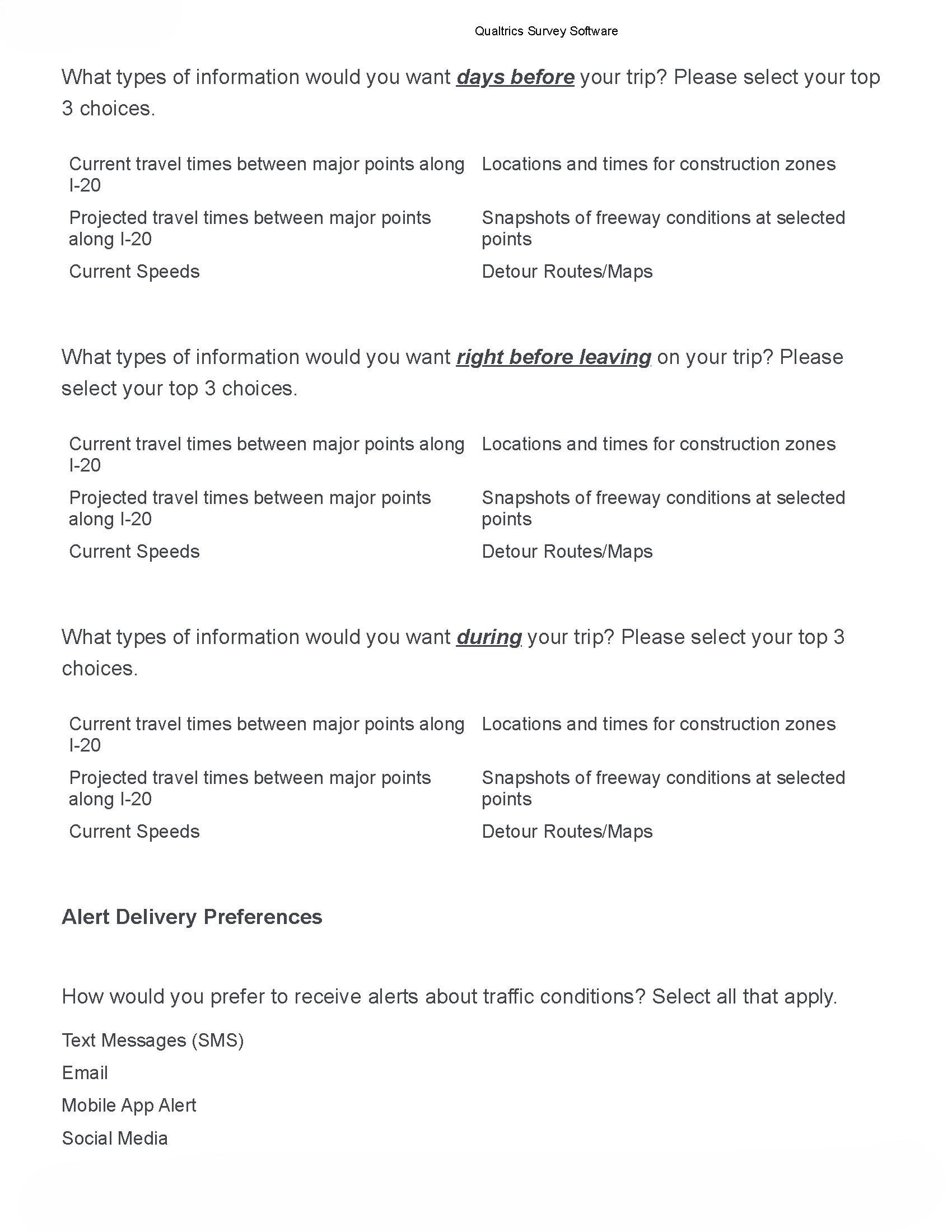
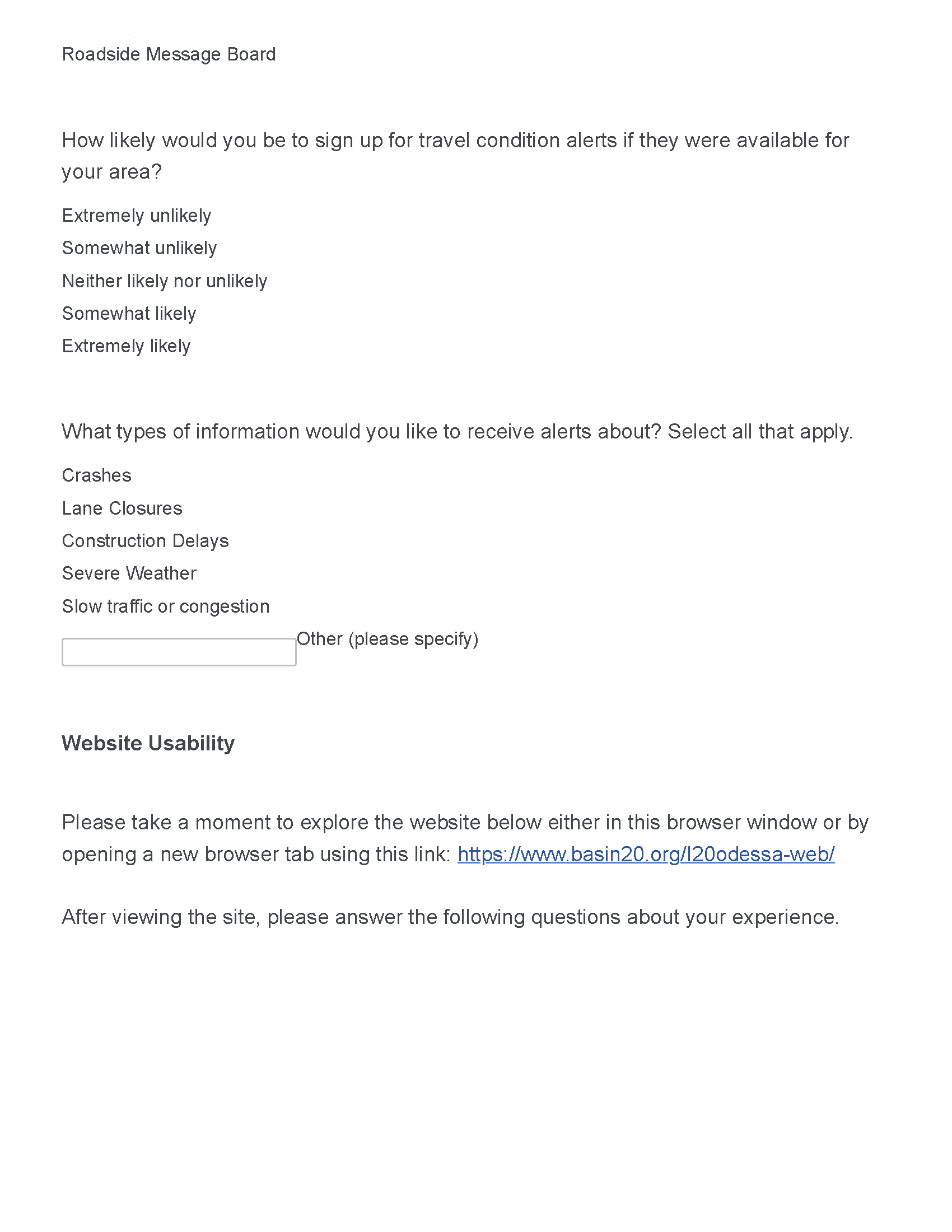
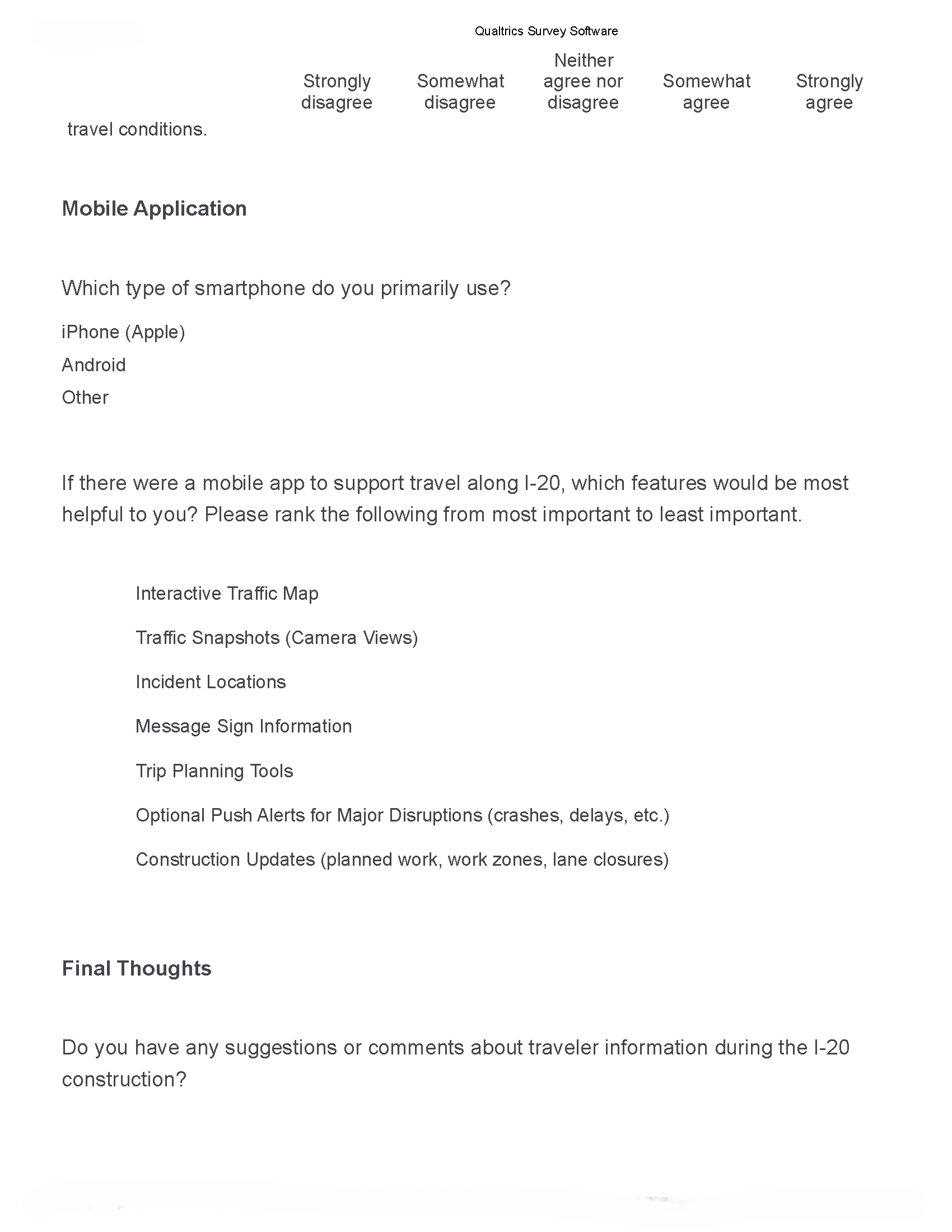
Public Survey Sample
This survey was developed as a follow-up to a public survey conducted at the start of the project. It aims to compare baseline data on residents' attitudes, perceptions, and awareness of ongoing construction in the Midland–Odessa region over time.
The survey also explores informational needs for potential digital solutions and the perceived usability of the traveler information website. Results will inform design decisions and help evaluate the effectiveness of current outreach efforts.